
At 90, Dame Judi Dench—legendary British actress, Oscar winner, and Dame Commander of the Order of the British Empire—can no longer watch a single scene on screen or step into a theatre to see a play. The reason? Severe Dame Judi Dench has been living with advanced age-related macular degeneration, a condition that has robbed her of central vision, making even the most familiar faces on screen dissolve into blur. The revelation, reported independently by MensJournal.com and Tribune Content Agency on November 26, 2025, marks a quiet, heartbreaking end to a lifetime spent immersed in the visual art of performance.
A Life Built on Seeing—Now Unable to Look
For decades, Dame Judi Dench lived through her eyes. From her breakthrough in Macbeth at the Old Vic to her iconic portrayal of M in the James Bond franchise, her performances were shaped by observation—reading scripts under stage lights, memorizing expressions, absorbing the rhythm of a live audience’s breath. Now, she can’t see the words on a script, can’t make out the faces of her co-stars in a film, can’t follow the choreography of a stage production. The irony is crushing. She spent her career interpreting emotion through the smallest glance, the subtlest shift in posture—and now, she can’t even see the screen that once carried her voice to millions.The Silent Thief: Age-Related Macular Degeneration
Age-related macular degeneration is not a sudden event. It’s a slow erosion. The macula, a tiny spot at the center of the retina, breaks down over time, stealing the sharp, detailed vision needed to read, recognize faces, or watch a television drama unfold. For Dame Judi Dench, this isn’t just a medical footnote—it’s the end of an artistic chapter. The condition is the leading cause of irreversible vision loss in adults over 50 in developed countries, affecting nearly 20 million Americans and over 1.5 million people in the UK alone. Yet, despite its prevalence, public understanding remains thin. Most assume it’s just "getting old." But for someone whose art depended on precision, it’s a form of erasure.No Quotes, No Answers—Just Silence
What’s most striking about the reports from MensJournal.com and Tribune Content Agency is what’s missing. No direct words from Dame Judi Dench. No statement from her family. No insight from her longtime agent or medical team. The articles end mid-sentence—"relying on..." and "number one cause..."—as if the publishers themselves couldn’t finish the story. That silence speaks volumes. Perhaps she doesn’t want to be pitied. Maybe she’s chosen privacy over publicity, as she always has. Or perhaps, in her own words, she simply doesn’t want to talk about it anymore.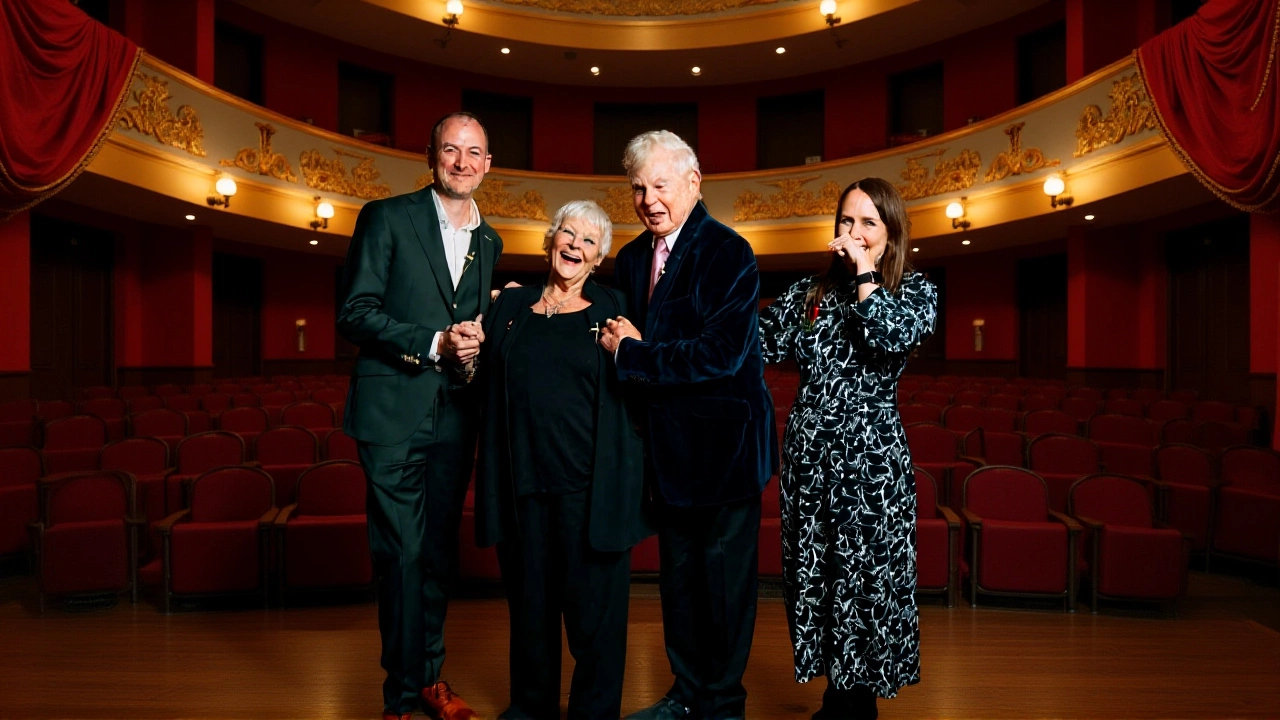
What This Means for Aging Artists
Dame Judi Dench is not alone. Many performers over 70 face similar battles. Sir Anthony Hopkins, now 87, has spoken openly about his mild macular degeneration, admitting he now relies on assistants to read scripts aloud. Dame Maggie Smith, 89, has gradually reduced her public appearances, citing fatigue—but never vision. The industry has no formal support system for aging actors losing their sight. No grants for audio scripts. No training for blind performers to return to stage. The assumption is that if you can’t see, you can’t act. But Dame Judi Dench proved for 70 years that acting is more than sight—it’s memory, instinct, soul. The question now is whether the arts will catch up.What Comes Next?
No one knows if Dame Judi Dench will return to the microphone, as she did in 2023 for a BBC radio drama. She’s never been one to retire quietly. But with central vision gone, even audiobooks become a challenge—her eyes once guided her pacing, her pauses, her emotional cadence. If she does return to performance, it will be a triumph of spirit over limitation. Meanwhile, her legacy continues to inspire. Her 2024 film The Wonder remains a haunting testament to her power, even as her own ability to watch it fades.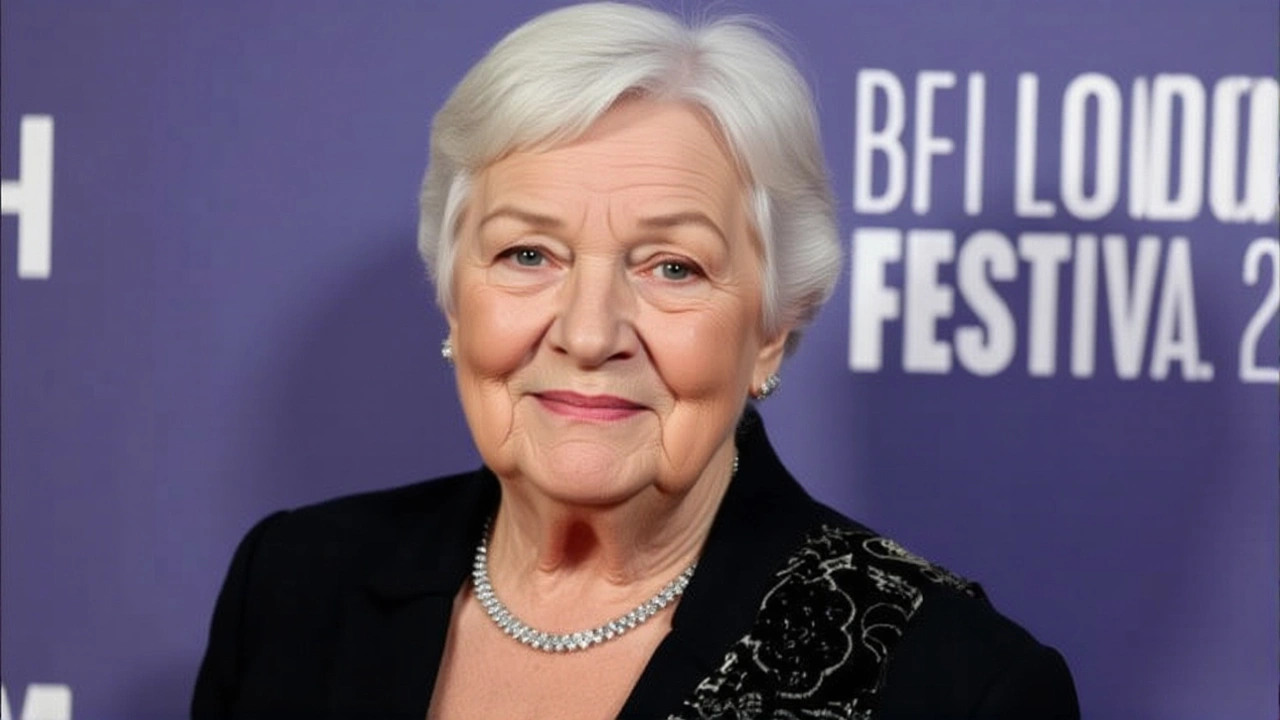
Behind the Scenes: The Unseen Cost
There’s a quiet economic toll too. Actors over 70 often rely on residuals, guest appearances, and voice work. When vision fails, those opportunities shrink. No one tracks how many veteran performers leave the industry not because they want to, but because they can no longer see the cue cards, the teleprompter, the script. Age-related macular degeneration doesn’t just steal sight—it steals livelihoods. And for a woman who worked until 88, who turned 90 last December, the loss is as personal as it is professional.Frequently Asked Questions
How does age-related macular degeneration affect daily life for elderly actors?
For elderly actors, age-related macular degeneration makes reading scripts, recognizing faces on set, and following stage blocking nearly impossible. Even with magnifiers or bright lighting, central vision loss distorts fine details—like facial expressions or text on cue cards. Many are forced to rely on audio recordings, assistants, or memory, which limits their roles and increases reliance on others. For performers like Dame Judi Dench, whose art was built on visual nuance, the impact is deeply personal.
Why didn’t the reports mention any adaptive tools or support systems?
The reports focused narrowly on the fact of her vision loss, not solutions. That’s common in media: shock value over depth. But in reality, tools like screen-reading software, tactile script markers, and audio-described theatre exist. Organizations like the UK’s Macular Society offer training for artists with vision loss. Still, few venues or producers are equipped to support them. The silence in the reports reflects industry neglect, not absence of options.
Is there any treatment that could restore her vision?
There is no cure for advanced age-related macular degeneration. Anti-VEGF injections can slow progression in the wet form, but only if caught early. Dench’s condition appears to have progressed to the late stage, where central vision loss is permanent. Clinical trials for retinal implants and gene therapies are underway, but none are approved for widespread use yet. For now, the focus is on adaptation—not restoration.
How common is vision loss among senior performers?
About 1 in 8 people over 65 have some form of macular degeneration, and the rate climbs to nearly 1 in 3 by age 80. Among professional performers, the numbers are likely higher due to decades of exposure to bright lights and screen glare. Many, like Dench, keep working until they can’t. Few speak publicly about it—out of pride, fear of being typecast, or simply because they don’t want to be seen as broken.
What legacy does Dame Judi Dench leave behind despite her vision loss?
Her legacy isn’t defined by what she can no longer do, but by what she did for 70 years: redefining what a woman, especially an older woman, can be on screen and stage. From Shakespeare to Bond to Mrs. Brown, she brought depth, wit, and humanity to roles others passed over. Even now, her voice—heard in audiobooks, radio plays, and archival footage—remains a guiding light. She didn’t need to see the spotlight to illuminate it for others.
Could she still perform in theatre or film in some capacity?
Absolutely—if the production adapts. Many blind actors have performed successfully using audio cues, tactile rehearsals, and trusted stage managers. Dench’s voice, timing, and emotional intelligence remain unmatched. A radio play, a voiceover, or a one-woman show with a narrator could still be powerful. The barrier isn’t her talent—it’s whether the industry is willing to reimagine how performance can happen when sight is gone.