
Registering in Paris isn’t just a formality-it’s often required if you’re staying longer than three months, working, studying, or even renting an apartment. Whether you’re an EU citizen moving for a job or a non-EU national on a long-term visa, the process can feel overwhelming. But it doesn’t have to be. Most people who’ve done it say the key is preparation, not perfection. You don’t need to speak fluent French, but you do need the right documents and a clear idea of where to go.
If you’re coming from the UK or another European country, you might be surprised how similar some steps are to registering elsewhere in the EU. But Paris has its own rhythm. For example, some municipal offices close early on Wednesdays, and appointments for residency papers can take weeks to book. There’s a quiet online community of expats who swap tips-like how to avoid the busiest prefecture lines or which documents are actually mandatory versus optional. One expat in Lyon told me she once showed up with 12 documents, only to be told two were enough. Don’t overpack your folder. Keep it simple. And if you’re looking for local tips on lifestyle or social connections, you might find euroescort london forums helpful for understanding how expats build networks abroad, even if the context is different.
Who Needs to Register?
You must register with the local town hall (mairie) if you plan to live in Paris for more than three months. This applies to:
- EU/EEA/Swiss citizens staying long-term
- Non-EU nationals with a long-stay visa (VLS-TS)
- Students enrolled in French institutions
- Employees working under a French contract
- Anyone renting an apartment under a formal lease
If you’re just visiting for tourism or a short business trip, skip this step. You won’t be asked for registration papers at hotels or airports. But if you’re moving your life to Paris, this is your first real step toward legal residency.
Where to Go: The Mairie of Your Arrondissement
Paris is divided into 20 districts, called arrondissements. Each has its own town hall. You must register at the mairie of the district where you live. If you’re unsure which one that is, check your lease or utility bill-it’ll say the address and arrondissement number.
For example, if you live on Rue de Rivoli, you’re in the 1st arrondissement. Go to Mairie du 1er arrondissement. You can’t register at a different district, even if it’s closer. Some people try to game the system by using a friend’s address, but that’s risky. The city checks leases and utility records. Getting caught can lead to fines or delays in future applications.
Documents You’ll Need
Bring these originals and one copy each:
- Valid passport or national ID card (EU citizens)
- Long-stay visa or residence permit (non-EU citizens)
- Proof of address: lease agreement, utility bill, or bank statement with your name and Paris address (no older than three months)
- Birth certificate (for non-EU citizens, must be translated and apostilled)
- Proof of income: recent pay stubs, bank statements, or scholarship letter
- One recent passport photo (white background, no glasses)
Don’t forget the apostille. If you’re from outside the EU, your birth certificate must be certified by your home country’s foreign affairs department and then legalized by the French consulate there. This can take weeks. Start early.
Booking Your Appointment
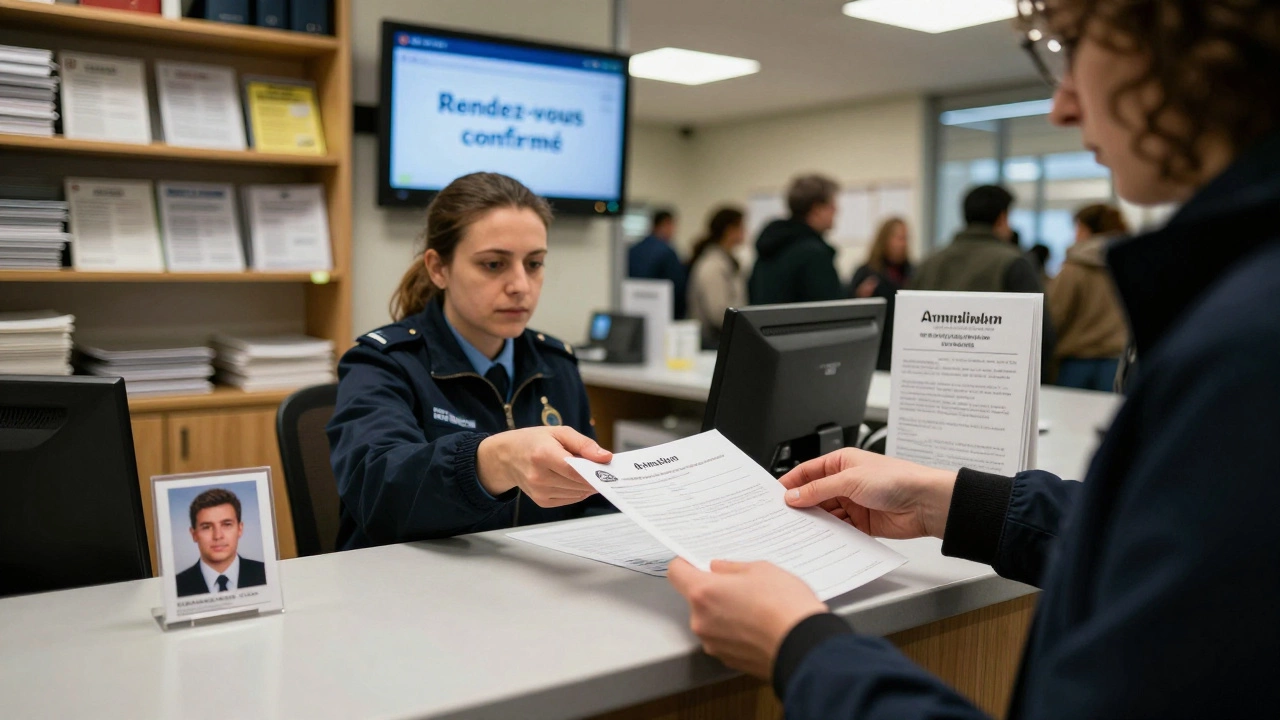
Paris mairies don’t accept walk-ins for registration anymore. You must book online. Go to the official website of your arrondissement’s mairie. Search for “rendez-vous inscription résidence” or “accueil étrangers.”
Some districts, like the 15th or 18th, have better online systems than others. The 7th might take 4 weeks to book; the 12th might have openings in 3 days. Check every morning. Slots open up when people cancel. Set a daily alarm. It’s worth it.
When you arrive, be on time. Bring everything. No exceptions. Staff won’t let you reschedule on the spot if you’re missing one paper. They’ll tell you to come back. And that next appointment? It could be another month away.
What Happens at Your Appointment
You’ll be asked to fill out a form called “Attestation d’accueil” if you’re staying with someone, or “Déclaration de résidence” if you’re renting. The staff will check your documents, scan your ID, and take your fingerprints if you’re non-EU.
You’ll get a receipt-this is your temporary proof of registration. Keep it safe. It’s valid for three months while you wait for your official certificate.
If you’re an EU citizen, you’ll receive a certificate of registration (Certificat de résidence) within a few weeks. Non-EU citizens will get a temporary residence card (VLS-TS) stamped in your passport, and later a plastic card by mail. Don’t lose it. You’ll need it for taxes, healthcare, and renewing your visa.
Common Mistakes and How to Avoid Them
Here’s what trips people up:
- Using a hotel address instead of a real lease. That won’t work.
- Bringing photocopies only. Originals are required.
- Waiting until the last day of your 90-day visa. You need to start the process before it expires.
- Assuming your landlord will help. Most won’t. You’re responsible for your own paperwork.
- Thinking English is enough. While some staff speak it, most don’t. Learn basic French phrases like “Je voudrais m’inscrire” (I would like to register).
One woman from Canada told me she brought her lease in English. The clerk refused it. She had to get a certified French translation the next day. She missed her next appointment by two weeks. Don’t be her.

After You Register
Once you’re registered, you can:
- Open a French bank account
- Apply for a French health card (Carte Vitale)
- Enroll your kids in public schools
- Apply for a driver’s license exchange
- Access social services like housing aid
It’s not just bureaucracy-it’s your gateway to living like a local. You’ll start getting mail from the city. You’ll be added to voter rolls if you’re an EU citizen. You’ll get invitations to neighborhood events. It’s the quiet start of belonging.
If you’re looking for social connections or cultural integration, many expats turn to local groups. Some find community through language exchanges, volunteer work, or even niche interest forums. For some, the social scene in big cities like London offers similar experiences-like meeting people through organized events or online networks. You might come across euro girls london communities online, which, while not directly related, show how expats build social bridges in unfamiliar cities. The principle is the same: find your people, wherever you are.
Renewals and Changes
Your registration isn’t permanent. If you’re non-EU, your residence permit expires after one or two years. You’ll need to renew it before it runs out. Keep track of the date. The city sends reminders, but don’t rely on them.
If you move to a new apartment in Paris, you must re-register at your new mairie. Even if it’s just across the street. Don’t assume your old registration transfers. You’ll need to repeat the process, even if you’ve done it before.
What If You Get Refused?
Refusals are rare if you have the right documents. But if it happens, ask for a written explanation. You have 30 days to appeal. Most refusals are due to missing paperwork, not eligibility. Get help from a local expat association or legal aid group. Many offer free advice.
Don’t panic. Don’t leave France. Just fix the issue and reapply. The system is slow, but it’s not broken.
And if you’re ever stuck, remember: the mairie staff aren’t there to make your life harder. They’re doing a job that’s often understaffed and underfunded. Be polite. Be patient. Show up prepared. That’s 80% of the battle.
Some people say Paris is cold. But if you’ve done the paperwork, paid your taxes, and walked the same street every morning for six months, you’ll start to feel it’s yours. That’s the real registration-not the stamp in your folder, but the quiet sense of being here, for real.
For those curious about urban lifestyles beyond Paris, you might notice parallels in other European capitals. In London, for instance, expats often navigate similar systems-housing, healthcare, bureaucracy. Some even connect through niche social circles. You might stumble upon mentions of euro girls escorts london in certain online spaces, but the takeaway isn’t about the service-it’s about how people in big cities seek connection, structure, and belonging in unfamiliar places. The same drive that leads someone to register in Paris is what pushes others to find community in London, Berlin, or Madrid.